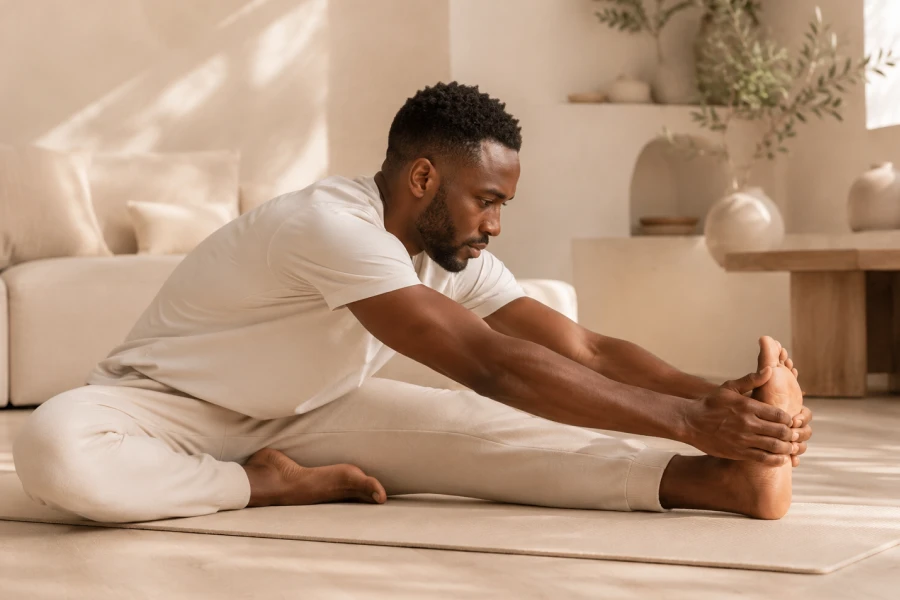
Flexibility exercises for beginners work best when they feel welcoming from the start. Many people avoid stretching because they imagine pain, awkward positions, or athletic expectations. That pressure makes consistency harder. Beginner-friendly movement should feel calm, clear, and realistic. Your body does not need to perform. It needs steady attention. One week of gentle practice can reduce stiffness. It can also improve confidence. You begin noticing where tension lives. Small progress becomes motivating. Instead of forcing change, you invite your body into movement it can actually accept.
New routines often fail when people push too hard too soon. Stretching should never feel like punishment. Use mild tension as your limit. Keep breathing comfortable. Avoid bouncing. Move slowly between positions. Your body needs time to understand the request. A gentle range of motion approach helps prevent frustration. You are not chasing dramatic flexibility. You are building communication. When your body feels safe, it responds more consistently. That is where real improvement begins.
You do not need a long session to begin. Five minutes can be enough. Stretch your neck. Open your chest. Reach toward your toes gently. Rotate your ankles. Release your wrists. These small moves wake up areas that daily routines often neglect. A home flexibility practice gives you control over timing. You can move before work. You can stretch after a shower. You can reset before bed. Flexibility grows when the habit feels accessible.
The best beginner movements support what your day already demands. If you sit often, open your hips. If you type frequently, stretch your wrists. If you carry bags, loosen your shoulders. If your lower back feels tight, move gently through the spine. Practical movement creates quick relevance. Your routine stops feeling random. A posture-friendly movement plan can connect each stretch to daily comfort. That connection matters. People keep habits when benefits feel close, clear, and personal.
Stretching teaches you to notice signals earlier. You may catch jaw tension during stressful afternoons. You may recognize tight hips after long drives. You may see how rushed mornings affect your shoulders. Awareness gives you choices. You can pause before discomfort grows. You can adjust your posture. You can move instead of ignoring tension. This is one reason beginner stretching becomes surprisingly powerful. It is not only physical. It also trains attention. Your body becomes easier to understand, and that understanding supports better daily decisions.
Rewards help new habits survive the first awkward stage. Keep the reward simple. Notice easier breathing. Enjoy warmer muscles. Mark a calendar. Play one favorite song. Use comfortable lighting. Small cues make the experience pleasant. A daily stretching system can turn these details into a repeatable ritual. Your brain begins connecting stretching with relief. That emotional link matters. Once movement feels good, you stop bargaining with yourself. You start returning because the habit gives something back.
After one week, resist the urge to overhaul everything. Add one stretch at a time. Hold positions slightly longer. Improve breathing before increasing difficulty. Let your body adapt. Slow growth prevents burnout. It also keeps confidence intact. You are building a foundation, not proving toughness. The right beginning makes flexibility feel possible. The right pace makes it sustainable. Your body changes through repetition. Your mindset changes through evidence. When both work together, a simple stretching habit can become a lasting part of your wellness routine.




Leave a comment