
A stretching habit at home gives your body a practical way to recover from ordinary tension. You do not need a studio. You do not need special equipment. You do not need a perfect schedule. Your living room, bedroom, or hallway can become enough. Home makes the habit easier to repeat. It removes travel time. It lowers self-consciousness. It lets you respond to stiffness quickly. The real advantage is convenience. When movement is nearby, you are more likely to choose it before discomfort takes over.
Your environment can either support the habit or bury it. Keep your mat visible. Place a towel nearby. Choose one open space. Remove clutter from that area. These choices make stretching easier to start. A simple mobility exercises routine works best when setup takes seconds. Friction matters. If you must search for space every time, the habit feels heavier. Make the first step obvious. Your future self will follow it more often.
Home routines fit around unpredictable days. You can stretch before breakfast. You can reset after work. You can move while dinner warms. You can release tension before sleep. Short windows count. A sustainable stretching schedule does not depend on perfect conditions. It respects interruptions. It allows smaller sessions. It keeps you connected to the practice. This flexibility makes the habit more durable. When your routine adapts, you do not have to quit whenever life gets busy.
Each room can remind you to move differently. Stretch your calves near the kitchen counter. Open your chest beside a doorway. Release your neck near your desk. Stretch your hips beside the bed. These location cues make movement automatic. You stop relying on memory alone. Your home becomes part of the system. That matters because habits respond to context. The easier the cue, the faster the action. Over time, movement becomes woven into your day instead of added as another task.
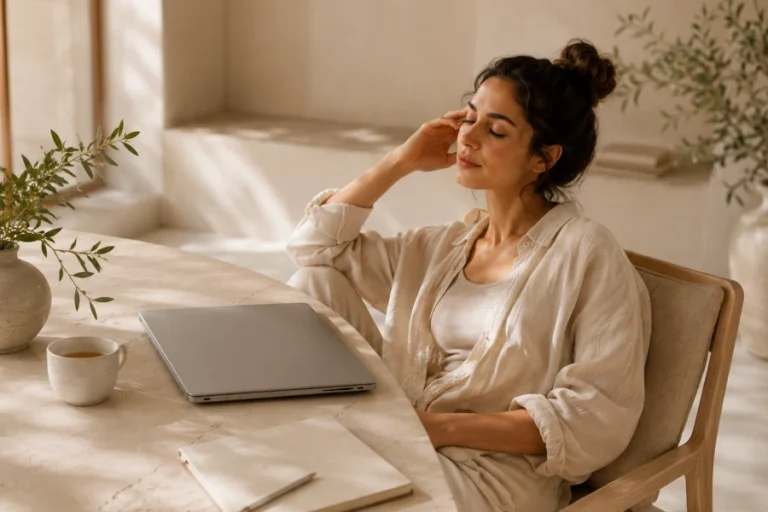
Stiffness often builds quietly. Long sitting tightens the hips. Screen time rounds the shoulders. Stress raises the neck. Repetitive chores affect the back. Home stretching addresses these patterns where they happen. A body stiffness relief approach helps you respond early. You do not need to wait for discomfort to become disruptive. Gentle movement can interrupt the buildup. That makes your body feel less trapped by routine. Small releases create more comfortable hours.
A home routine should feel soothing, not chaotic. Lower the lights if that helps. Use quiet music if it supports focus. Keep your phone away. Move slowly through familiar stretches. Let your breathing set the pace. A wellness movement routine becomes more appealing when the atmosphere feels pleasant. This does not require luxury. It requires intention. The more peaceful the experience feels, the more easily your mind associates stretching with relief.
The habit becomes powerful when it changes how you see yourself. You are not someone waiting for pain. You are someone who responds early. You are not chasing perfection. You are choosing care. That identity makes missed days easier to recover from. One skipped session does not erase progress. You simply return. Home gives you that option every day. Keep the practice small enough to repeat. Let it grow only when it feels natural. Consistent stretching can make ordinary life feel noticeably lighter.


Leave a comment